
news-19032021
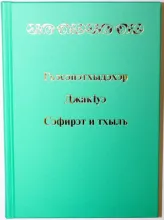
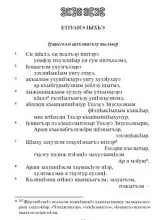
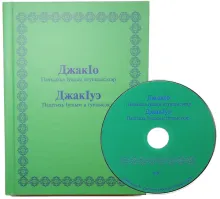
IBT Russia has recently published a new edition of OT Scripture portions in the Kabardian language, spoken by over half a million people in the North Caucasus region of the Russian Federation. This edition contains three books of the Bible. Proverbs was first published in Kabardian in 2017 and has proved to be quite popular with readers. Ecclesiastes was published in 2020 in a bilingual edition together with a translation of this book into the closely related Adyghe language. Esther has now been published in Kabardian for the first time. The edition also includes a glossary, a subject index, and a map of Biblical places found in the book of Esther. An audio recording of these books on CD comes with the printed edition, and can also be found in the Kabardian Scripture app “ФIыцIагъэ ЛъапIэ” in Google Play and AppStore.
news-17012021
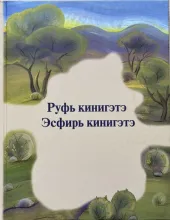
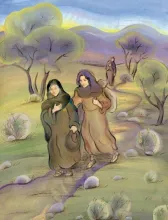
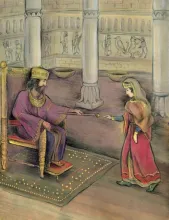
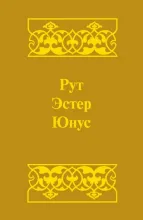
In continuation of our Old Testament translation project into Sakha (a.k.a. Yakut), the Institute for Bible Translation has published the books of Ruth and Esther in a single edition. These are the only two books of the Bible named after women, and they are being printed in Sakha for the first time ever.
The books were translated by Dmitri Sivtsev and Raisa Sibiryakova, and edited by Sargylana Leontyeva and Nikolai Efremov. The text was checked by IBT consultant Alexei Somov, and the foreword to the edition was written by Roman, the Orthodox Archbishop of Yakutia. A new set of illustrations was produced for this edition by Yakut artist Maria Adamova, who had earlier produced illustrations for the book of Jonah...
news-18012021
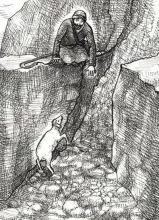
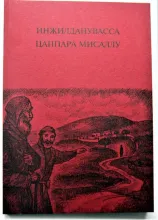
The Institute for Bible Translation has just published the second book of Scripture portions in Siberian Tatar. Following the book of Jonah, which came out in the beginning of 2020, the present publication contains a collection of nine parables from the Gospel of Luke: the Parable of the Sower (8:4-15), the Good Samaritan (10:29-35), the Rich Fool (12:16-21), the Pharisee and the Tax Collector (18:9-14), the Rich Man and Lazarus (16:19-31), the Wedding Feast (14:15-24) , the Lost Coin (15:8-10), the Lost Sheep (15:3-7) and the Prodigal Son (15:11-32).
Gospel parables are allegorical lessons and examples borrowed from nature and everyday life. Jesus Christ (known as the Prophet Isa in Muslim ethnic groups such as the Siberian Tatars) often used such short, simple stories in his sermons. They may seem to be about ordinary life situations familiar to anyone, but Jesus uses them to communicate profound spiritual truths...
news-17112020
Adyghe belongs to the Abkhaz-Adyghe language family of Caucasian languages. There are 117,500 speakers, most of whom live in the Republic of Adyghea in southern Russia.
In preparation for the future publication of the Pentateuch in Adyghe, the book of Deuteronomy was recently released in advance in electronic form, and now it is also in printed form. The first two books of the Pentateuch were printed 2005 (Genesis) and 2015 (Exodus), while Leviticus and Numbers are still in the translation process.
news-111120
IBT is happy to announce the release of a bilingual edition of Ecclesiastes in Adyghe and Kabardian, closely-related languages of the North Caucasus in the Russian Federation.
First, a little history. The official classification of Adyghe and Kabardian as separate languages appeared in 1922, when the Adyghe (Cherkess) and Karachay-Cherkess autonomous regions were formed inside the USSR. Until that time, the two languages were considered to be dialects of a single Circassian language. Over the past century, Adyghe and Kabardian have each developed independently (especially in their written forms), but some speakers of Adyghe and Kabardian still feel that they belong to the same language community. The Ecclesiastes publication was born out of a desire to preserve and develop the community between these two peoples.
news-12102020
The Laks are one of the indigenous peoples of Dagestan. Their language belongs to the Nakh-Dagestanian group of languages and is spoken by around 146,000 people. It is one of the 14 official languages of Dagestan. A newspaper is published in Lak and Dagestan radio broadcasts programs in Lak.
The Institute for Bible Translation’s Gospel Parables series began in 2007 with the Agul language edition, followed in 2015-2020 with the addition of versions in Bezhta, Tatar, Rutul, Tsakhur, Dargi, Dungan, Kumyk, Nogai, Kabardian, Even, Digor and Nenets...
news-09092020
According to the 2010 census of Russia, there are 485,705 speakers of Dargi. There are a number of Dargi dialects, with the literary dialect being taught in most schools in traditionally Dargi regions. Books, newspapers, magazines, and a regional theater all use this literary dialect, so it was chosen as the language of the Bible translation project.
Previously, IBT published the Gospel of Mark (2002, 2007), the Gospel of Luke (2010), the Gospel of Matthew (2013), and a collection of Gospel Parables (2017) in Dargi. For the translation of Ruth, Esther, and Jonah, a new translator joined the project.
news-150720
news-30062020
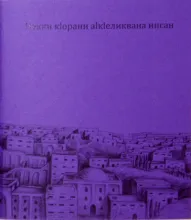
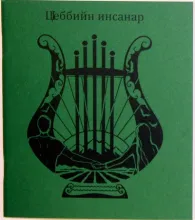
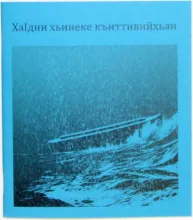
The Tsakhur people are indigenous to the Caucasus region, historically residing in southern Dagestan and northern Azerbaijan (about 25,000 people in all, according to censuses taken in 2009 and 2010). They profess Sunni Islam. Their language belongs to the Lezgic family of the Nakh-Dagestanian group of North Caucasian languages.
articles-22062020
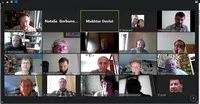

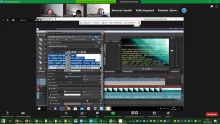
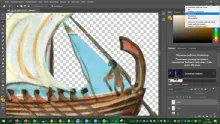
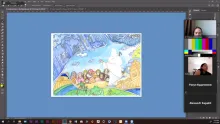
IBT held a translation workshop on two of the Minor Prophets via Zoom on June 11-18. This was the first time in IBT’s history that one of our workshops has been conducted as a webinar.
The online format of this workshop was necessitated by the coronavirus pandemic and the related quarantine measures. Nevertheless, its advantages quickly became apparent. Many IBT translators are university instructors, and for them, June is traditionally a very busy time, full of summer courses and entrance exams. Translation team members who would not have been able to come to Moscow for a face-to-face seminar were still able to find time in their busy academic schedules for full participation in the virtual workshop.