
newsletter-050921

“Whatver a human being can produce is never perfect. Even if you are highly professional in what you do, there is always the chance that time and a new perspective will show you what could be improved. Moreover, language and culture are never static, so translation too needs to keep up with ongoing developments. As the ancient Greeks used to say, πάντα ρεῖ – ‘everything flows’ – including language and culture. And we as Bible translators need to accept this and adapt to it. Many Bible scholars believe that ideally every generation should have its own Bible translation.”
newsletter-010621

newsletter--010321
articles-22122020
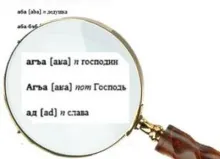
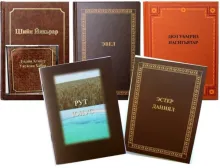
As I looked through the Tabasaran-Russian dictionary developed by Selina (a pseudonym), a Tabasaran linguist, a thought flashed through mind: “It must feel odd you to pray to God in Russian, where the word ad ‘hell’ sounds the same as the word ad ‘glory’ in your mother tongue.” Selina is the field-tester and local co-ordinator in IBT’s Tabasaran Bible translation project, and I also knew that she is a Christian believer. However, when I voiced my guess that she probably uses Tabasaran, and not Russian, in her church, she laughed merrily at my total ignorance. “Do you really think that there are so many Christians among my people that we could have opened a Tabasaran church?” she shrugged. “There are just two Christians on our translation team: the translator and myself. The rest of the team members are Muslims, as are the absolute majority of Tabasarans. Of course we have to attend a Russian-language church.”
newsletter-080920
Here is Mal 2:2 in the Revised Standard Version: “If you will not listen, if you will not lay it to heart to give glory to my name, says the Lord of hosts, then I will send the curse upon you and I will curse your blessings; indeed I have already cursed them, because you do not lay it to heart.” What is a “blessing”? And a “curse”? When using these words today...
newsletter-010620

newsletter-020320

newsletter-061119

newsletter-050919
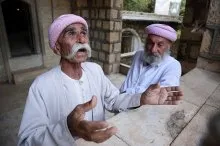
From several Kurdish testimonies, we see that for many Kurds who became followers of Christ, the very beginning of their life quest was absolutely the same. Both for our senior team member, who is the long-term translator, and for a younger team member, who has been a philological editor and an external reviewer of the Kurdish Scripture translation for several years, the path that finally led them to Christ started at the age of 8 or 9 years old with a realization that death awaits all. Our translator’s story was surprisingly similar to Prince Gautama’s: he saw a dead person being carried through their village to his funeral. The younger team member (let’s call him Alex) had a different life story: he was one of six children, and the only one who lived past childhood. At the age of 4 or 5 Alex lost his last remaining brother, and at the age of 8-9 his mind and heart became restless, tormented and hypnotized by questions about the inevitability of death and the meaning of life.
newsletter-300519