
The Institute for Bible Translation Russia/CIS is a non-profit organization financed through contributions from individuals, sponsoring organizations and foundations. By clicking on the "Contribute" button in the main menu, you can easily make a one-time or regular (monthly) donation, that will support our Bible translation projects.
In 2025 IBT celebrates the 30th anniversary of its work in Russia. The anniversary celebration was held as part of an international conference called "Linguistic Forum 2025: Bible Translation as a Means of Language Preservation and Development. Traditions and New Approaches," organized by IBT and the Institute of Linguistics (RAS). Read more
psalms-in-nogai
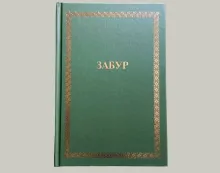
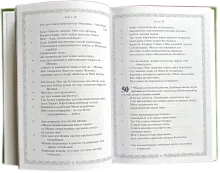
IBT has released a new edition, the Zabur (Psalter) in the Nogai language. Previously published by IBT in this language were the books of Ruth, Esther and Jonah (2005), the New Testament (2011), Genesis (2016), Gospel Parables (2016), Proverbs (2017), the Pentateuch (2023), and the Children’s Bible (2025).
The Nogai language belongs to the Kipchak group of Turkic languages. The Nogais are settled over a wide area in the North Caucasus and the Southern Volga region of Russia. According to the 2021 census, over 109,000 people speak Nogai...
kalmyk-audio-recording-of-genesis-and-exodus
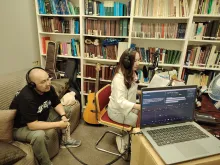
Audio versions of the Old Testament books of Genesis and Exodus in the Kalmyk language have been recorded at the office of the Institute for Bible Translation (IBT) in Moscow. The project brought together Sandzhi Pursyakov, Honored Artist of the Republic of Kalmykia, and Elistina Shinyakaeva, one of IBT’s Kalmyk Bible translation team members. The two alternated in the roles of narrator and text editor.
kyrgyz-oral-bible-translation
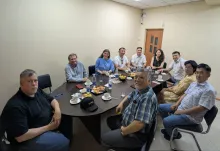
On June 25, the Bible Society of Kyrgyzstan hosted a meeting in Bishkek to explore the potential of oral Bible translation into the Kyrgyz language. At present, the Bible Society of Kyrgyzstan, in collaboration with the organization LinguaService, is engaged in rendering the Bible into high literary Kyrgyz.
It was decided to launch a one-year pilot project that will apply oral translation methodology to produce a common-language Kyrgyz version of the book of Jonah. The resulting translation will be released in multiple audio formats...
genesis-in-khakas
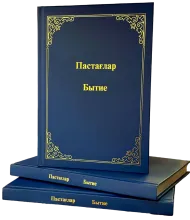
IBT has published the book of Genesis in the Khakas language of south Siberia. This first book of the Old Testament includes key biblical narratives, including the creation of the world, Adam and Eve, Noah’s Flood, the Patriarchs, Sodom and Gomorrah, and Joseph and his brothers. The 500-copy print run features the Russian Synodal translation side by side with the Khakas text and includes maps of the ancient Near East.
The Khakas (who call themselves the Tadhar) number about 61,400 according to the 2021 census of Russia and live primarily in the Republic of Khakassia, Krasnoyarsk Krai and the Republic of Tuva...
genesis-in-the-abaza-language
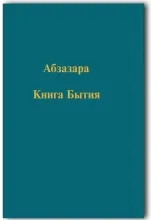
The Institute for Bible Translation (IBT) has released a new edition — the book of Genesis in the Abaza language of the NW Caucasus. The edition was published as a diglot with a parallel Russian text, as well as maps. The print run was 300 copies.
Genesis is the first book of the Old Testament and the opening book of the biblical canon. It presents key narratives of fundamental importance to all Abrahamic religions: the creation of the world, the story of Adam and Eve, the account of Noah and the great flood, the life of Abraham and his willingness to sacrifice his son, the stories of Sodom and Gomorrah, Joseph and his brothers, and others...